

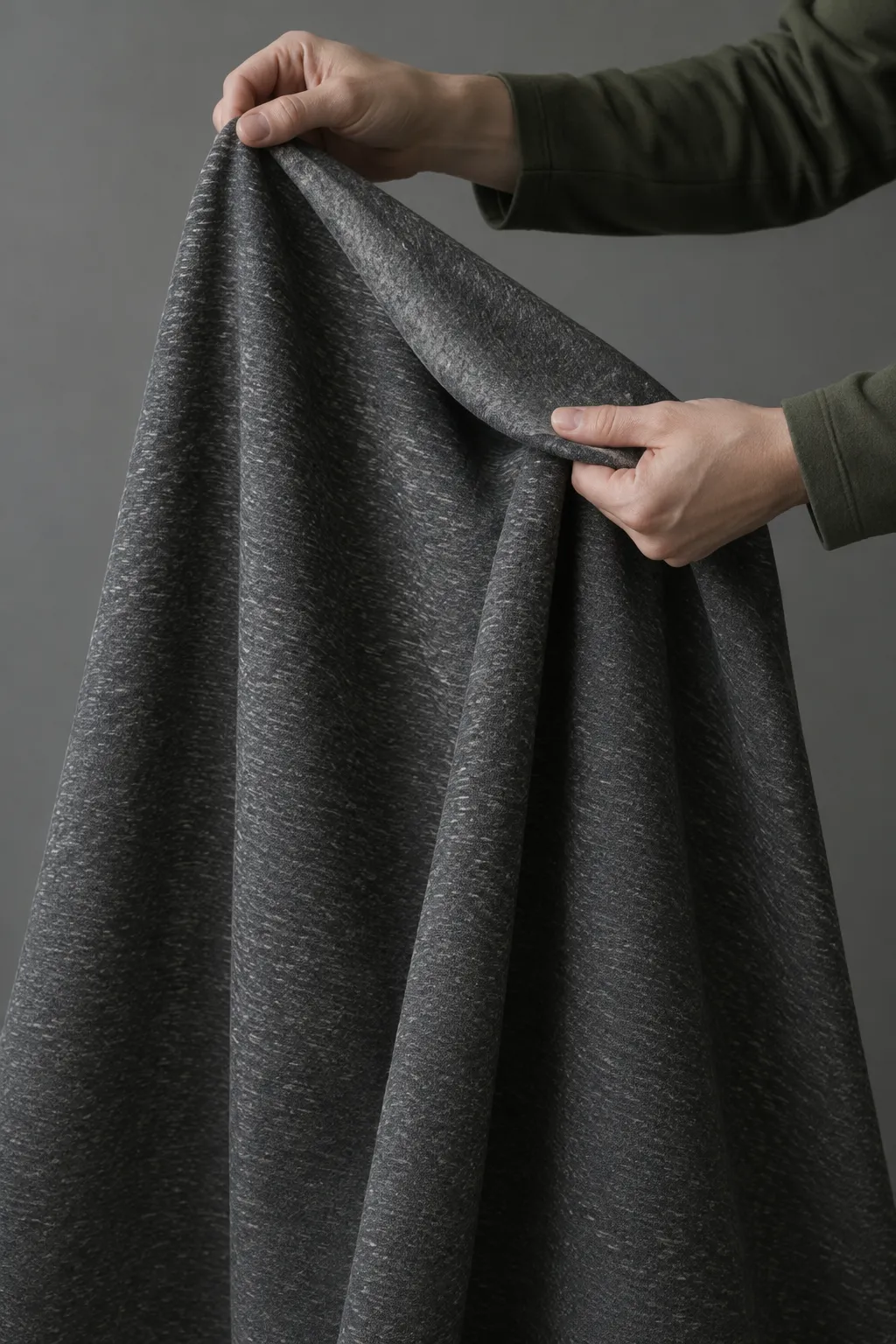
No Trade-Off in Performance
Once re-extruded, recycled fibre matches virgin material in strength, dyeing and hand.
Material technology profile
Reducing petrochemical feedstock by remaking recovered material into fibre. Every fabric states its exact content, from 37% to 100% — no vague wording standing in for a number
Parent layerMainstay →
How it works
Polyester and nylon are normally refined from crude oil. Recycled fibre starts from material that already exists instead: recovered bottle flake or waste yarn is cleaned, melted and re-extruded into filament ready to be woven, while recycled nylon comes largely from discarded fishing nets and process waste. Once re-extruded, the fibre matches virgin material in strength, dyeing and hand — what differs is where the feedstock came from, not how the fabric performs. Content percentage is the one verifiable fact, so every fabric states its own.
01 / 02
Evidence-led proof points explain what this material technology delivers. Values depend on construction and verified testing.
Once re-extruded, recycled fibre matches virgin material in strength, dyeing and hand.
The yarn is made from reclaimed PET bottles and post-industrial polyester waste rather than newly extracted petroleum feedstock. Hand and physical performance match virgin polyester; what changes is where the raw material comes from — the most direct material-level choice a brand can make, and the easiest one to explain to the end consumer
Drag or use arrow keys to explore
Performance may vary by fabric and construction. Confirm values against approved test documentation.
Location
8F., No. 896, Jingguo Rd., Luzhu Dist., Taoyuan City 338018, Taiwan (R.O.C.)
Social